
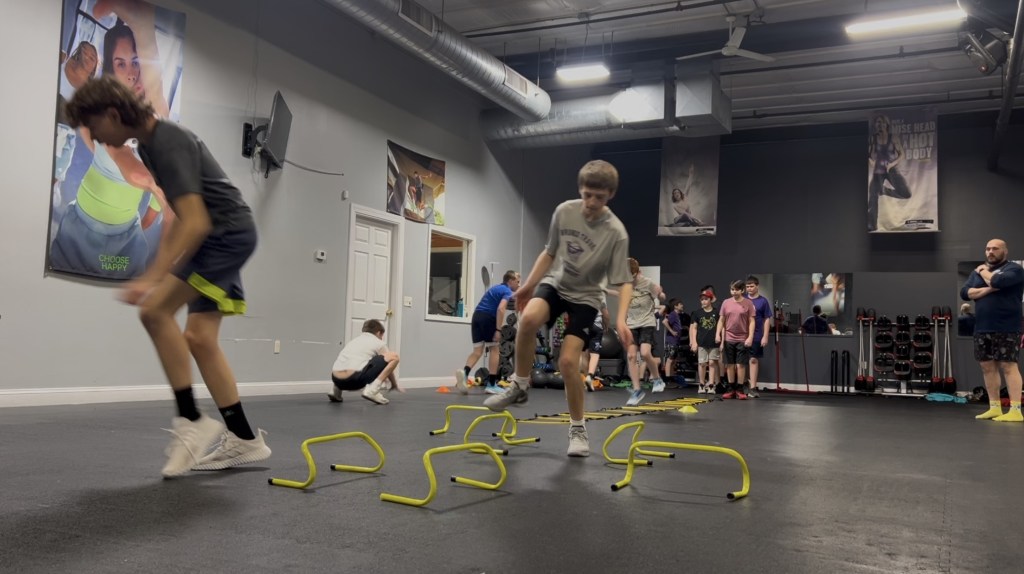
Introduction: Agility is More Than Just Speed
Many people assume that speed and agility are the same, but they’re actually very different. A fast athlete might be able to sprint in a straight line quickly, but if they lack agility, they’ll struggle with cutting, dodging, reacting, and changing direction efficiently.
In almost every sport—football, basketball, soccer, tennis, baseball—agility separates average players from elite ones. Athletes who can move quickly, smoothly, and efficiently have a major advantage over their competition.
In this post, we’ll break down the science behind agility, the best training techniques, and why personal trainers play a key role in developing elite-level agility.
What is Agility?
Agility is the ability to change direction quickly and efficiently while maintaining control and balance. It combines:
✔ Reaction Speed – How quickly an athlete processes information and reacts.
✔ Footwork – The ability to move feet rapidly and precisely.
✔ Balance & Stability – Controlling the body while making rapid movements.
✔ Coordination – Syncing upper and lower body movements smoothly.
✔ Acceleration & Deceleration – Quickly speeding up or slowing down when needed.
👉 Example: A soccer player who quickly cuts to avoid a defender or a basketball player making a fast crossover dribble is using elite agility.
How to Train for Agility
1. Footwork & Quickness Drills
Foot speed and control are critical for agility. Fast, precise footwork allows athletes to stay light on their feet and make rapid adjustments.
🏃 Top Footwork Drills:
✅ Ladder Drills – Improves coordination and quickness.
✅ Cone Drills – Enhances change-of-direction speed.
✅ Jump Rope – Builds rhythm, timing, and foot speed.
✅ Dot Drills – Trains rapid foot placement and reaction.
🔹 How a Trainer Helps: They correct foot positioning and movement mechanics to ensure efficiency and speed.
2. Change of Direction Training
Agility requires sharp, controlled movements when cutting, pivoting, or dodging.
🔄 Best Change-of-Direction Drills:
✅ 5-10-5 Shuttle Drill – Develops lateral quickness and reaction speed.
✅ T-Drill – Enhances multi-directional movement.
✅ Lateral Bounds – Improves side-to-side explosiveness.
✅ Crossover & Shuffle Drills – Trains lateral movement for sports like basketball and tennis.
🔹 How a Trainer Helps: They analyze an athlete’s movement patterns and help them cut more efficiently with less wasted motion.
3. Reactive Agility Drills
Sports aren’t predictable—athletes must react to defenders, opponents, and game situations in real-time.
⚡ Reaction-Based Drills:
✅ Mirror Drills – One athlete reacts to another’s movements.
✅ Colored Cone Reaction Drills – Athletes move based on visual or verbal cues.
✅ Partner Tag Drills – Develops real-time change-of-direction instincts.
🔹 How a Trainer Helps: They create game-like scenarios to develop fast decision-making skills.
4. Strength & Core Training for Agility
Strength plays a major role in agility—stronger legs and core muscles help with stability and balance during rapid movements.
💪 Best Strength Exercises for Agility:
✅ Single-Leg Squats – Improves balance and control.
✅ Lunges (Forward & Lateral) – Builds strength in cutting movements.
✅ Planks & Russian Twists – Strengthens the core for stability.
✅ Hex Bar Jumps – Develops lower-body explosiveness.
🔹 How a Trainer Helps: They design strength programs that complement agility work for maximum results.
Why Personal Trainers are Essential for Agility Training
🏆 Trainers Customize Drills for Each Sport – A soccer player needs different agility work than a football player. Trainers personalize drills for specific athletic needs.
🧠 They Teach Proper Cutting & Movement Mechanics – Bad movement patterns lead to ACL tears, ankle sprains, and other injuries. Trainers fix inefficiencies before they become problems.
📊 They Track Progress & Improve Weaknesses – Agility training isn’t just about doing drills—it’s about improving reaction speed, movement efficiency, and control. Trainers monitor performance to ensure athletes are progressing.
⚠ Injury Prevention Focus – Quick cutting movements put a lot of stress on the knees and ankles. Trainers ensure proper strength and mobility work to reduce injury risk.
Final Thoughts
Agility is one of the most valuable skills in sports. A fast athlete who lacks agility won’t be able to cut, react, or change direction effectively—and that can cost them in competition.
By incorporating footwork, reaction drills, strength training, and expert coaching, young athletes can dramatically improve their quickness, reaction time, and movement control. Hiring a personal trainer ensures they train correctly, safely, and efficiently to maximize their agility potential.
 Gagne Performance Training
Leave a comment